If your company has no place of business in China, Chinese law requires you to file through a local agency. The practice behind Intenova has been doing exactly that for over twenty years — for Linde, Bridgelux and forty other companies filing into China.
Why a Chinese agency
Foreign applicants often assume appointing a local agency is optional — something you do for convenience. In China it is a statutory requirement, and it has been since the Trademark Law was written.
An applicant may handle a trademark registration application or other trademark matters on its own or through a lawfully established trademark agency. A foreigner or foreign enterprise applying for trademark registration or handling other trademark matters in China shall entrust a lawfully established trademark agency to handle the matter.
— Trademark Law, Article 18 · 《商标法》第十八条 — in force through 31 December 2026
From 2027-01-01 this becomes Trademark Law (2026 Revision), Article 11(2) of the 2026 Revision, which writes the limitation into the statute itself and adds "other foreign organisation". The obligation is unchanged.
The law defines a "foreign enterprise" as one with no habitual residence or place of business in China — so a Delaware corporation selling into China through a distributor is covered, and so is a German manufacturer whose goods are made here under contract. A foreign company that already has a branch or representative office here is not caught, and may file on its own. Most guidance skips that half of the sentence.
Which means the question was never whether you need a Chinese trademark agency. It is which one you appoint — and whether they will put a clear, itemised quote in writing before you have to chase them for one.
What we do
Filing into the right subclasses is most of the job. China subdivides every Nice class into similarity groups, and a registration only bites inside the groups you actually claimed.
Trademark filing →Invention, utility model and design. Foreign applicants routinely skip the utility model — no substantive examination, granted in 6–14 months, and fully enforceable.
Patent filing →Oppositions, invalidations, non-use cancellations, customs recordal and litigation — including the case where somebody registered your brand here before you did.
Enforcement →Why Intenova
Trademark, patent, copyright, enforcement and portfolio work — filed and defended from a single firm in China, so nothing falls between two providers.
Our patent attorneys work across mechanical, electronics, chemistry and biotech. They read drawings and claims — which is why our drafting clears examination.
Pre-filing searches and freedom-to-operate analysis, so you know the odds — and the obstacles — before you commit budget.
The official CNIPA fees are public and we show them line by line. Our own service fee is quoted per matter, in writing, before you engage us — nothing bundled, no hidden charges.
Watch services, brand monitoring and portfolio planning after the grant. Most of our foreign clients stay on a standing retainer.
A CNIPA-registered patent agency (code 35218) and trademark agency, with an in-house law firm for litigation. Every claim on this page is checkable.
Business scope
Most foreign brands come to us for a trademark or a patent. Many stay for everything around it — searches, disputes, customs recordal, portfolio planning and compliance, handled inside one licensed firm.
Fees
CNIPA sets its official fees in Chinese yuan, and we publish them in full in our fees guide — line by line, next to the government's own schedule — so you can check every figure against the source. Our own service fee is not a standard price list: we quote it per matter, in writing, before you engage us. Nothing is bundled, nothing is marked up, and there are no hidden charges.
Official fees: CNIPA Trademark Office — Schedule of Fees — online-filing rate, in force since 2019-07-01. View the published schedule. Last checked 2026-07-16.
Representative matters
A cross-border patent dispute against a US company, and a trademark case won on appeal. Named where the client consented, anonymised where they did not — the domestic matters shown as evidence of capability, not claimed as inbound work.
A Xiamen technology company received an infringement warning from a major US automotive manufacturer. We compared the asserted patents against the product, judged the risk real, then examined the patents' own validity and found prior art capable of undermining them.
Outcome — Armed with that analysis, the client negotiated a favourable settlement and avoided the loss — then retained us for a full wireless-charging patent-risk review.
Chinese client vs US patent-holder
The client held five registered marks in Class 25 (footwear). A seller offered look-alike goods through a marketplace storefront, and the platform did not act on the cease-and-desist letter. We sued both.
Outcome — The court ordered the infringer to stop and pay damages and the marketplace to close the store, with the platform jointly liable. The judgment was upheld on appeal.
Chinese client vs domestic infringer + marketplace
Three-phase induction motors are specified for peak load and then spend most of their life at part load, where power factor falls away and energy is wasted. Working for an induction-motor manufacturer in Fuzhou, we took the field apart patent by patent: where the Chinese and foreign filings sit, who holds them, which routes are already fenced off, and where the research is actually moving — winding and connection design, starting and braking, structural changes for heat dissipation and high-temperature service, forced-air cooling that can be maintained in the field, and rare-earth permanent-magnet materials.
Outcome — The study set the direction for the client's own programme — NVH performance, and the efficiency gains needed for the IE4 and IE5 classes — and for the patent filings that came out of it. Intenova is named on the project record as the patent-navigation service provider.
Commissioned by 福州万德电气有限公司, Fuzhou
A solenoid valve inside diagnostic and treatment equipment is a small component with a long patent trail. We decomposed the technology, mapped where the Chinese and foreign filings sit, went through the litigation the field has already produced, identified the points where claims cross and infringement becomes possible, and read the competitors' portfolios for direction — the trend, the research hotspots, and the technical barriers already standing.
Outcome — The deliverable was a filing strategy built on what the field already owns rather than on guesswork, and a documented view of the IP risk that travels with an electric fluid-control product sold across borders. Intenova is named on the project record as the patent-navigation service provider.
Credentials & recognition
Independently conferred and verifiable. Where an accreditation is still being confirmed, we leave it blank rather than claim it.
ISO 56005 — Innovation and IP Management Capability Grading
Vice-Chairman Unit, Fujian Patent Attorneys Association (since 2012)
Outstanding Trademark Agency of Fujian Province, 2018–2019
A+ agency for patent pre-examination, Fujian IP Protection Center (2025)
Vice-Chairman Unit, 1st Council of the Xiamen Patent Attorneys Association (2026)
In-house events
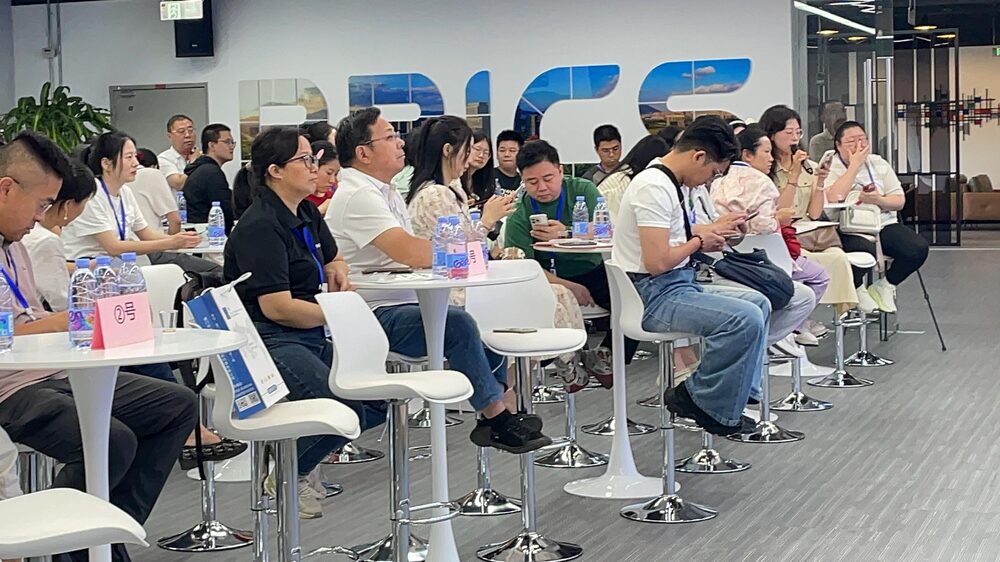
From exchange visits with overseas partners to our training series on turning IP from passive defence into an active strategy — the thinking we bring to a mandate, run as workshops and moot-court exercises for our own team and the companies we serve.
Global reach · clients
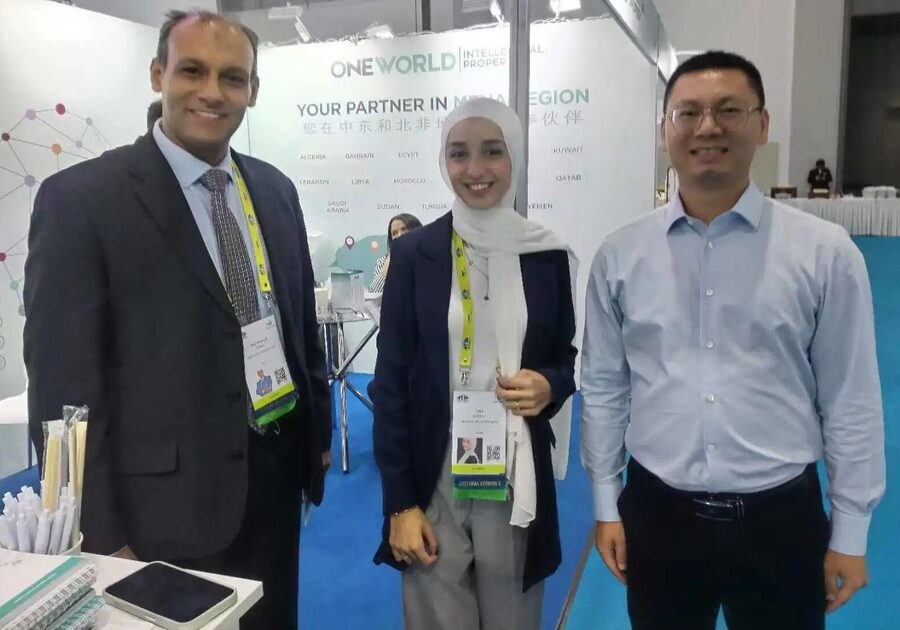
We work through a network of partner IP firms across North America, Europe, Southeast Asia, Africa, Japan and Korea, and Greater China — the reach behind trademark and patent portfolios secured in 110+ countries and regions.
Partner network
Forty-two of them we are able to show by name, including Linde, Bridgelux and two Taiwanese manufacturers — foreign applicants who had to appoint a Chinese agency and appointed this one.



















Guides
Every number below is checked against CNIPA, the NDRC schedule or WIPO, and carries the document number and the date we last checked it. Where we could not verify something, we say so instead of guessing.
The statutory deadlines — nine months for examination, three months to oppose, fifteen days to appeal a refusal — and how they differ from what actually happens.
Read the guide →The official fee is ¥270 per class online — about US$40 at the 2026-08-10 rate. If an agency tells you the official fee is "$50", ask which exchange rate — and which decade.
Read the guide →The 13th edition of the Nice Classification took effect on 1 January 2026. China layers its own similarity groups on top, and examiners apply them mechanically.
Read the guide →WIPO cut the individual fee for designating China on 12 April 2026 — first class went from 249 to 220 Swiss francs. Most English-language guides still quote the old number.
Read the guide →We will tell you which classes and subclasses we would file in, what CNIPA will charge, and give you a written quote for our own work. If someone has already registered your brand here, we will tell you that too. Every enquiry gets a reply within three working days.
Start a conversationA legal service provider dedicated to global IP strategy, protection and commercialisation.